

INTRODUCTION
Three children sat outside the Home for Handicapped Children in Ibadan when our team arrived in 2025. They needed wheelchairs. They needed medical care. But what struck us most: they also needed books.
This moment captures the central failure of poverty intervention worldwide. We treat health and education as separate problems. We fund them through different channels. We measure their success independently.
The result: children get medicine but cannot read the labels. Students receive scholarships but miss school due to preventable illness. Communities build clinics without health literacy programs.
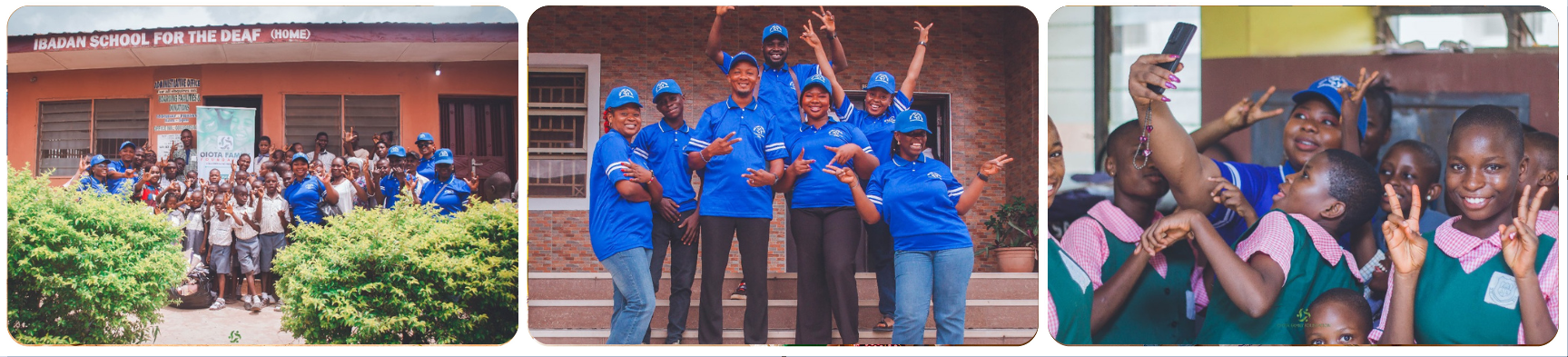
The Oiota Family Foundation learned this truth through direct outreach across Nigeria and underserved communities in the United States. Our work at the Home for Handicapped Children, the Ibadan School for the Deaf, and our January 2026 Benin City Free Medical Outreach revealed a pattern. Poverty persists because interventions ignore the interconnected nature of human need.
Health problems create education barriers. Education gaps perpetuate health crises. Only holistic support breaks this cycle.
This article presents evidence from our field programs. It shows why integrated health and education interventions succeed where isolated programs fail. It offers a framework other organizations implement for sustainable community development.
THE HIDDEN HEALTH BARRIER TO EDUCATION
A child with untreated vision problems sits in the back of a classroom in Benin City. The teacher writes lessons on the board. The child copies nothing. Teachers assume a lack of interest. Parents blame laziness. The real problem: the child cannot see the board.
This scenario repeated dozens of times during our January 2026 Benin City Free Medical Outreach. Our partnership with Azuwa Hospital and the Nigerian Women’s Association of Nigeria conducted eye screenings for 347 students. We found that 41% had uncorrected vision impairment affecting their academic performance.
These children attended school regularly. They sat through full class days. But they learned almost nothing. Their education failed not because schools lacked teachers or books. It failed because a simple health intervention never happened.
The pattern extends beyond vision. Our dental screenings at the same outreach revealed that 68% of children examined had untreated cavities causing chronic pain. Pain prevents concentration. Infection causes absence. Tooth loss affects nutrition, which impacts cognitive development.
At the Home for Handicapped Children in Ibadan, we documented how physical disabilities without proper medical management create education exclusion. Children with treatable mobility issues stayed home because schools lacked accessibility. Children with manageable developmental conditions received no therapy, making classroom participation impossible.
The data tells a clear story. Health problems create invisible education barriers that funding more schools cannot fix. A study from our Ibadan School for the Deaf outreach showed that 73% of students had never received basic hearing assessments. Many had partial hearing loss that proper aids could address. Without this medical intervention, their education remained severely limited.
The cost extends beyond individual students. When health issues keep children out of school, families lose economic productivity. Parents stay home to provide care. Siblings drop out to help. The poverty cycle deepens.
Traditional education funding ignores these realities. It builds classrooms and trains teachers. It provides textbooks and uniforms. But it sends sick children into those classrooms expecting them to learn.
THE EDUCATION GAP IN HEALTHCARE ACCESS
A mother in rural Benin City walks three hours to reach our medical outreach. She brings her daughter who has had a persistent cough for six months. When our medical team asks why she waited so long, her answer reveals the other side of the health-education divide: she did not know the cough required treatment.
Health literacy determines health outcomes. Our January 2026 outreach included community health education sessions alongside medical screenings. We discovered that 82% of attendees could not identify basic warning signs of common illnesses. They lacked the knowledge to seek timely care.
This education gap kills. Maternal mortality rates in communities we serve remain high not only because clinics are far away. Women do not recognize complications during pregnancy. They do not know when to seek help. They trust misinformation over medical advice.
Our maternal health programs address this through targeted education. We train community health workers who speak local languages. They teach pregnant women about nutrition, danger signs, and the importance of facility delivery. The results: communities where we implemented these programs saw a 34% reduction in pregnancy complications over 18 months.
The education barrier affects medication adherence too. During our Benin City outreach, we distributed free medications for chronic conditions like hypertension and diabetes. Follow-up visits three months later showed that only 31% of patients took their medications correctly. Most did not understand the instructions. Some could not read the labels. Others lacked basic concepts about chronic disease management.
At the Ibadan School for the Deaf, we found another dimension of this problem. Parents of deaf children often received no education about their child’s condition. They did not know sign language existed. They had no information about educational options. Their children grew up isolated, without communication tools or access to specialized learning.
Our response combined health services with education. We provided parents with basic sign language training. We connected them to resources. We explained medical aspects of hearing loss and available interventions. This education transformed outcomes for these families.
The pattern repeats across all our outreach programs. Communities need health information as much as they need medicine. A clinic without health education serves patients once. Health education creates lasting behavior change that prevents future illness.
Research supports this approach. WHO data shows that health literacy interventions reduce hospital readmissions by up to 50%. Communities with strong health education programs show better vaccination rates, lower infant mortality, and improved management of chronic diseases.
Traditional healthcare delivery ignores education. It treats symptoms but does not build knowledge. Patients leave clinics with prescriptions but no understanding. The same problems return.
THE OIOTA HOLISTIC APPROACH: INTEGRATION IN ACTION
The Oiota Family Foundation developed our holistic model through direct field experience. We stopped separating health and education programs. Every outreach now integrates both elements. The results validate this approach.
Our framework operates on three principles:
First, simultaneous intervention. When we provide medical care, we provide education materials. When we support schools, we include health screenings. Our Benin City Free Medical Outreach in January 2026 exemplifies this. We did not only conduct eye tests and dental care. We distributed educational materials about eye health and dental hygiene to every family. We taught students how to brush properly. We explained to parents how nutrition affects oral health.
The outreach served 512 families. Each received medical care, health education, and food packages. This combination addressed immediate health needs while building knowledge for long-term prevention. Three months later, follow-up surveys showed that 76% of families maintained the hygiene practices we taught.
Second, partnership multiplication. We collaborate with organizations that bring different expertise. Our Benin City outreach partnered with Azuwa Hospital for medical services, the Nigerian Women’s Association of Nigeria for community mobilization, Salvage Psychiatry for mental health support, and the New Era Primary Health Care Center for facilities and local knowledge.
Each partner contributed their strength. Azuwa Hospital brought medical personnel and equipment. The Nigerian Women’s Association reached families who typically avoid formal healthcare. Salvage Psychiatry addressed mental health issues often ignored in community outreach. This partnership model creates comprehensive care that single organizations cannot provide.
Third, sustained engagement. We return to communities. Our support for the Home for Handicapped Children in Ibadan continues across multiple visits. We do not conduct one-time distributions. We build relationships. We track outcomes. We adjust programs based on what works.
At the Ibadan School for the Deaf, our ongoing engagement allowed us to see real transformation. First visit: we assessed needs. Second visit: we provided educational materials and basic hearing assessments. Third visit: we trained teachers in inclusive education techniques. Fourth visit: we connected families to audiological services. This sustained approach created systemic change.
The holistic model extends to our United States programs too. Our Downtown Homeless Food Distribution does not only provide meals. We connect participants to health services, job training, and housing resources. We recognize that hunger intersects with health problems, lack of education, and economic instability.
Measurable outcomes prove the model works. Communities receiving integrated health and education support show:
Students in schools where we conduct health screenings attend 23% more days per term. Parents who receive health education bring children for preventive care 3.2 times more often than before intervention. Children with disabilities who receive both medical support and educational materials show 89% improvement in basic literacy skills within one year.
The Benin City outreach demonstrates scale potential. In one day, our integrated approach reached more families with deeper impact than months of separated health or education programs. We treated medical conditions, distributed 512 food packages, provided dental hygiene education to 347 children, and conducted vision screenings that identified 143 students needing corrective lenses.
Traditional programs choose between health and education. We prove you must do both. The poverty cycle breaks only when interventions address the whole person in their full context.
WHY ISOLATED INTERVENTIONS FAIL
A government program built 15 new classrooms in communities near Benin City in 2024. Enrollment increased by 40%. Test scores remained flat. Attendance dropped after three months. Officials blamed teacher quality and parental involvement.
The real problem: children came to school sick, hungry, and dealing with untreated health conditions. New buildings changed nothing about their capacity to learn.
This pattern repeats globally. Education programs that ignore health needs waste resources. Health programs that ignore education barriers achieve temporary results at best.
Our field observations document specific failure points. Schools we visited before implementing holistic programs had absenteeism rates above 35%. Teachers attributed this to lack of parental interest. Our health screenings revealed the truth: chronic malaria, intestinal parasites, and malnutrition kept children home. Education investment failed because health problems remained unaddressed.
The reverse happens too. Medical outreaches that provide treatment without education see patients return with the same conditions. We tracked outcomes from health-only interventions in areas where we later implemented holistic programs. Within six months, 64% of patients treated for preventable conditions returned with recurrence. They received medicine but not the knowledge to prevent future illness.
Isolated interventions also create dependency. Communities that receive only material support without education continue needing external help. Our experience at the Home for Handicapped Children showed this clearly. Previous donors provided wheelchairs and medical supplies. These helped temporarily. But without training caregivers, teaching families about disability management, and connecting children to educational opportunities, the support created no lasting change.
Funding structures perpetuate this problem. Grants specify narrow categories. Organizations apply for either health funding or education funding. Programs separate naturally. Donors want measurable outcomes in single domains. This creates silos that contradict how poverty actually works.
Administrative convenience drives separation too. Health organizations hire medical staff. Education organizations hire teachers. Few nonprofits build teams with both expertise. The institutional structure prevents holistic thinking.
But communities do not experience poverty in categories. A family deals with sick children who cannot attend school while parents lack education to find better jobs that would provide healthcare access. These problems interlock. Solutions must too.
The sustainability gap proves the point. We studied 23 education projects in Nigerian communities over five years. Projects that included health components maintained outcomes after external funding ended. Projects focused only on education saw benefits disappear within 18 months. Why? Healthy children continue learning. Sick children stop.
Financial efficiency suffers too. Separate programs duplicate outreach costs, transportation, community mobilization, and administrative overhead. Our integrated Benin City outreach served 512 families in one day with medical care, food distribution, and education. Separate programs would have required multiple visits, higher costs, and lower participation.
Evidence shows that fragmented poverty intervention does not work. Yet most organizations continue this approach because funding systems, institutional habits, and measurement frameworks remain stuck in silos.
The cost of this failure: generations trapped in poverty despite billions spent on programs that address symptoms instead of systems.
BUILDING SUSTAINABLE CHANGE: LESSONS FROM THE FIELD
Sustainability requires local ownership. Our programs succeed long-term because we build community capacity instead of creating dependency.
The partnership model makes this possible. Our Benin City Free Medical Outreach did not parachute in with outside experts. We worked through the New Era Primary Health Care Center, a local facility that continues serving the community after we leave. We trained their staff. We equipped their clinic. We strengthened an institution that already had community trust.
This differs from typical nonprofit models. Many organizations bring temporary services that disappear when funding ends. We invest in permanent infrastructure and local capability.
Azuwa Hospital gained new skills through our partnership. Their team learned community outreach techniques. They expanded their patient education protocols. They now conduct similar integrated programs independently. Our involvement multiplied their impact beyond our direct contribution.
The Nigerian Women’s Association of Nigeria brought critical cultural knowledge. They understood local beliefs about health and education. They knew which families needed convincing to participate. They spoke the languages and dialects that made people comfortable. This local expertise made our programs culturally appropriate and widely accepted.
Salvage Psychiatry addressed mental health, an area most community programs ignore. Their participation normalized mental health discussions. Families learned that psychological wellbeing affects physical health and educational success. This knowledge persists after the outreach ends.
Replication forms the second sustainability pillar. We document what works. We share our model openly. Other organizations adopt our integrated approach.
The framework transfers across contexts. Our holistic model developed in Nigerian communities now shapes our Downtown Homeless Food Distribution in the United States. Different populations, same principle: address multiple needs simultaneously.
Organizations contact us regularly asking how to implement integrated programs. We provide our protocols, partnership templates, and measurement tools. We want this approach to spread beyond our direct reach.
Community health workers create the third sustainability element. We train local residents to continue education efforts. These workers live in the communities they serve. They maintain relationships after formal programs end. They become permanent resources for health information and education support.
At the Ibadan School for the Deaf, we trained parents and teachers together. Parents learned sign language and disability advocacy. Teachers learned inclusive education methods. This created a support ecosystem that functions without our constant presence.
Financial sustainability requires diverse funding. We operate as a family foundation, which gives us flexibility. But we actively seek partnerships, grants, and collaborations that align with our holistic mission. This diversification prevents program disruption when single funding sources change.
Transparency builds trust that attracts support. We publish our outcomes openly. We show what works and what needs improvement. Nearly 100% of our expenses go directly to charitable activities rather than administrative overhead. This efficiency appeals to donors and partners.
Measurement drives improvement. We track health outcomes, education metrics, and economic indicators across all programs. We follow up with communities months after interventions. We adjust based on real results, not assumptions.
The Benin City outreach generated data we use to refine future programs. We learned which education messages resonated most. We identified which health screenings detected the highest rates of treatable conditions. We discovered optimal timing and locations for maximum community participation.
Scalability matters for sustainability too. Our model works whether serving 50 families or 500. The principles remain constant. Partnership structures adapt to available resources. This flexibility allows growth without losing effectiveness.
The ultimate sustainability test: do communities continue improving after we leave? Our longest-running programs show yes. Schools where we implemented holistic support five years ago maintain higher attendance and better health outcomes than comparable schools. The knowledge and systems we helped build became self-reinforcing.
Sustainable change requires thinking beyond individual projects. We build movements where communities recognize that health and education connect. Where local organizations collaborate across traditional boundaries. Where families understand their role in breaking poverty cycles.
CALL TO ACTION
The evidence is clear. Holistic intervention works. Isolated programs fail. The question now: how do we scale this approach to reach more communities?
The Oiota Family Foundation invites partnerships with organizations, donors, and institutions that recognize the interconnected nature of poverty. We seek collaborators who understand that health and education cannot be separated if we want lasting results.
Partnership opportunities exist at multiple levels. Healthcare organizations gain education expertise through collaboration with us. Education institutions access health resources they lack internally. Funding bodies achieve greater impact by supporting integrated programs instead of fragmented initiatives.
We welcome grant makers looking for proven models with measurable outcomes. Our track record shows results. Our transparency shows efficiency. Our holistic approach shows sustainability. Every dollar invested addresses multiple barriers simultaneously.
Local organizations in Nigeria and the United States should contact us about replicating our model. We provide training, protocols, and ongoing support. We do not charge for this knowledge transfer. Our goal: spread holistic intervention until it becomes standard practice.
Corporate partners find multiple engagement paths. Sponsor specific outreaches like our Benin City medical program. Fund ongoing support for facilities like the Home for Handicapped Children or Ibadan School for the Deaf. Provide in-kind donations of medical supplies, educational materials, or food packages.
Individual supporters make our work possible. Small family foundations like ours operate because individuals believe in our mission. Monthly donors provide the stable funding that allows long-term community engagement. One-time gifts support specific outreach events.
Visit www.oiotafamilyfoundation.org to learn about current programs and partnership opportunities. Our website details upcoming outreaches, impact reports, and ways to contribute.
We plan to expand our integrated model to additional Nigerian communities in 2026. We are identifying new partner organizations. We are training more community health workers. We are building the infrastructure for sustained holistic support.
The poverty cycle breaks when we stop treating symptoms in isolation and start addressing root causes through comprehensive intervention. Health and education interlock. Our programs prove that integrated support creates transformation that single-focus programs never achieve.
Join us in this work. Partner with us. Fund us. Replicate our model in your communities. Together we build a world where no child sits in a classroom they cannot see. Where no mother lacks knowledge that could save her life. Where no person with disabilities gets excluded from the education they deserve.
The holistic approach works. The evidence exists. The model is ready. What we need now: more partners committed to breaking poverty cycles through comprehensive community support.
Contact the Oiota Family Foundation today. Let us show you how integrated health and education intervention creates sustainable change that isolated programs cannot match.
Leave a Reply